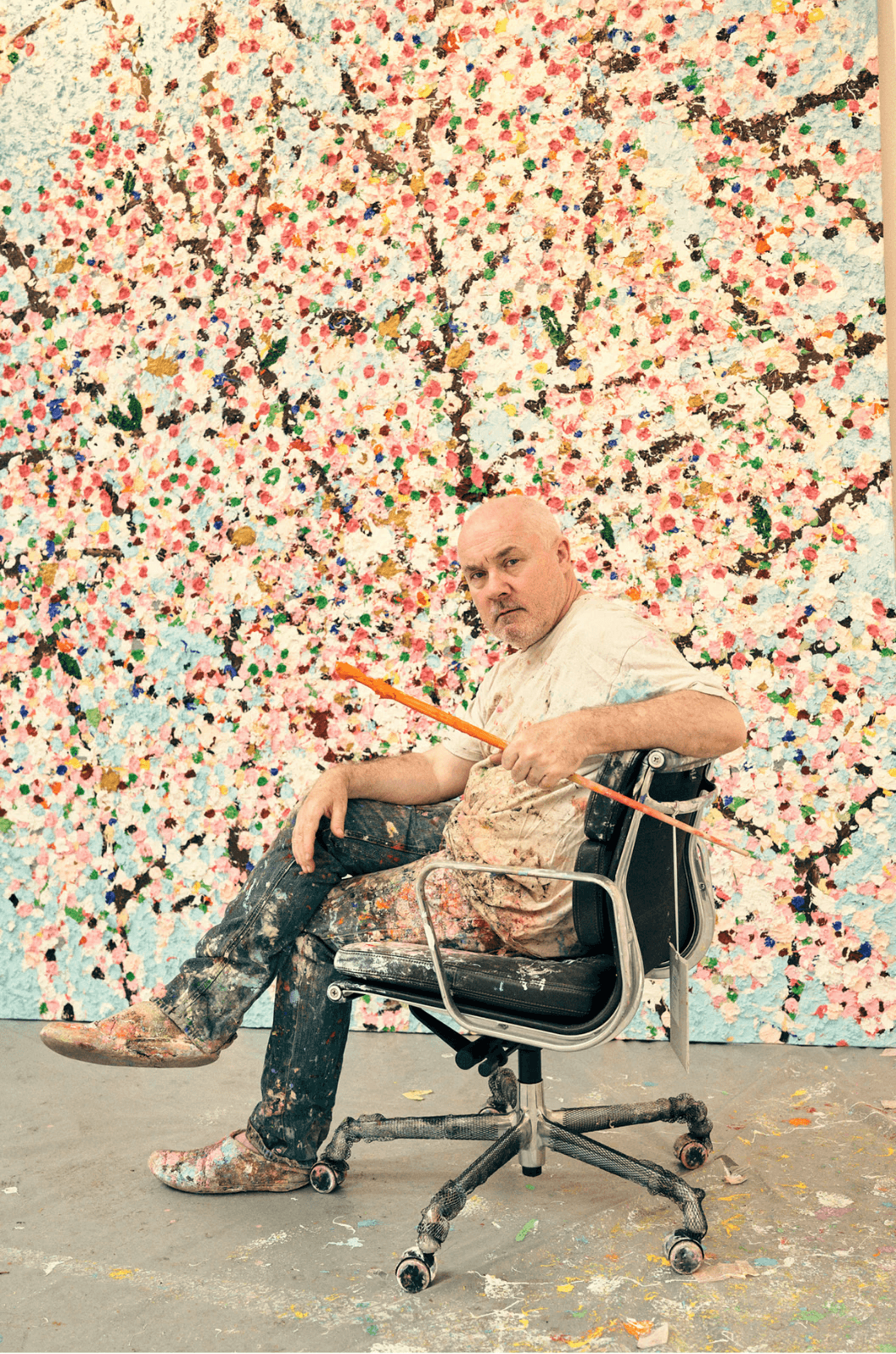
Damien Hirst
Born 1965, Bristol (UK)
Lives & works between London and the countryside of Devon
Focus
Explores life, death, science, belief, and value.
Biography
Damien Hirst is a British contemporary artist born in Bristol, England, in 1965 and raised in Leeds. He studied Fine Art at Goldsmiths College in London from 1986 to 1989. While still a student, he organised the exhibition Freeze in 1988, which helped establish the group known as the Young British Artists (YBAs).
Working across sculpture, installation, and painting, Hirst explores themes of life, death, science, and belief. He is particularly known for his animals preserved in formaldehyde, including the shark in The Physical Impossibility of Death in the Mind of Someone Living (1991). Another famous work, For the Love of God (2007), is a platinum cast of a human skull covered with diamonds.
Hirst won the Turner Prize in 1995, and Tate Modern presented a major retrospective of his work in 2012. His provocative approach has made him one of the most widely recognised figures in contemporary British art.
Damien Hirst is a British contemporary artist born in Bristol, England, in 1965 and raised in Leeds. He studied Fine Art at Goldsmiths College in London from 1986 to 1989. While still a student, he organised the exhibition Freeze in 1988, which helped establish the group known as the Young British Artists (YBAs).
Working across sculpture, installation, and painting, Hirst explores themes of life, death, science, and belief. He is particularly known for his animals preserved in formaldehyde, including the shark in The Physical Impossibility of Death in the Mind of Someone Living (1991). Another famous work, For the Love of God (2007), is a platinum cast of a human skull covered with diamonds.
Hirst won the Turner Prize in 1995, and Tate Modern presented a major retrospective of his work in 2012. His provocative approach has made him one of the most widely recognised figures in contemporary British art.
Damien Hirst is a British contemporary artist born in Bristol, England, in 1965 and raised in Leeds. He studied Fine Art at Goldsmiths College in London from 1986 to 1989. While still a student, he organised the exhibition Freeze in 1988, which helped establish the group known as the Young British Artists (YBAs).
Working across sculpture, installation, and painting, Hirst explores themes of life, death, science, and belief. He is particularly known for his animals preserved in formaldehyde, including the shark in The Physical Impossibility of Death in the Mind of Someone Living (1991). Another famous work, For the Love of God (2007), is a platinum cast of a human skull covered with diamonds.
Hirst won the Turner Prize in 1995, and Tate Modern presented a major retrospective of his work in 2012. His provocative approach has made him one of the most widely recognised figures in contemporary British art.
Positioning
Provocative.
Conceptually bold.
A defining and controversial force in contemporary art.
Provocative.
Conceptually bold.
A defining and controversial force in contemporary art.
Provocative.
Conceptually bold.
A defining and controversial force in contemporary art.
Approach
Works across sculpture, installation, painting, and conceptual series.
Iconic motifs include preserved animals in formaldehyde, spot paintings, spin paintings, and butterfly works.
Works across sculpture, installation, painting, and conceptual series.
Iconic motifs include preserved animals in formaldehyde, spot paintings, spin paintings, and butterfly works.
Works across sculpture, installation, painting, and conceptual series.
Iconic motifs include preserved animals in formaldehyde, spot paintings, spin paintings, and butterfly works.
Key Work
The Physical Impossibility of Death in the Mind of Someone Living (1991) — a shark suspended in formaldehyde, confronting mortality and perception.
Collections & Exhibitions
Exhibited globally in major institutions and museums.
Works held in leading international public and private collections.
Artworks exhibited at N°OW'HERE"

Que Muero Porque No Muero, 2005
Que Muero Porque No Muero, 2005
